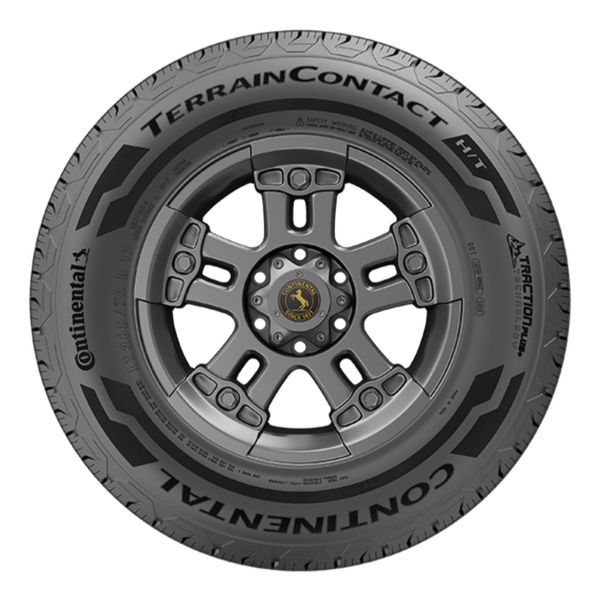
Zero Up-Size Is a Real Upsell Opportunity — If You Know How to Work It

Here’s a conversation that happens in tire shops every day: a customer comes in for a straightforward replacement on their truck or SUV, and somewhere in the small talk they mention they’ve always wanted it to sit a little taller. They don’t want new wheels. They’re not looking for a lift kit. They just want the thing to look more like it means business.
That’s your opening. Zero up-size — sometimes called tall-and-skinny fitment — is the practice of stepping up overall tire diameter while keeping the customer’s original equipment wheels. It’s one of the cleaner upsells in tire retail because the customer already wants it. Your job is just to make it easy to say yes.
What It Actually Is
Zero up-size means going taller on diameter without changing wheel size. A common example: a customer on stock 245/70R17s (about 30.5 inches overall) steps up to a 265/70R17, which comes in around 31.6 inches — roughly an inch taller, same 17-inch wheel. No spacers, no rubbing, no lift required. Just a more aggressive stance and a better-looking truck for the price of four tires.
The math that governs it: overall diameter = (section width × aspect ratio × 2 / 25.4) + wheel diameter. Running that takes thirty seconds and keeps you from quoting something that won’t fit.
The SKU Pairs Worth Knowing
The zero up-size conversation happens most on light trucks and SUVs, and the popular moves cluster around a few common jumps:
245/70R17 → 265/70R17. About 1.1 inches taller. Fits most half-tons without modification. Works across AT and highway terrain lines.
265/65R18 → 275/70R18. Roughly 1.2 inches. Common on newer three-quarter-ton platforms. Always verify clearance at full steering lock.
255/55R20 → 275/60R20. About 1.3 inches. Frequently requested on late-model half-tons with factory 20s. Tends to land in premium price territory.
225/65R17 → 245/70R17. A conservative jump that works well on SUVs and crossovers with enough wheel well room.
Knowing your supplier’s matrix in these size slots — and having two or three dependable SKUs ready to quote — is what turns the conversation into a closed sale instead of a lost one.
Why the Margin Makes Sense
The economics are straightforward. A customer expecting to pay $140 per tire for a stock 245/70R17 all-terrain gets a quote of $168 for the step-up 265/70R17. That’s $28 more per unit, $112 more across the set. If your cost difference is $18 per tire, you’ve picked up an extra $40 in gross without changing your labor charge at all — mount and balance is the same either way.
Add a road hazard close — which is easier on a tire the customer is genuinely excited about — and a zero up-size ticket can run $150 to $200 more than a straight replacement. Have that conversation a few times a week, close half of them, and you’re looking at real incremental revenue from something that requires no new equipment and no extra floor space.
Fitment Homework You Can’t Skip
This upsell only works if the tire fits. A few things to check before quoting any zero up-size:
— Stay within diameter tolerance. Most vehicles have two to four percent of headroom above OE diameter before speedometer error and clearance issues show up. Don’t push past it.
— Check width at full lock. An extra 20mm of section width on a front-wheel-drive platform can rub at full steering lock even when it clears straight-ahead. Always verify on FWD applications.
— Match or exceed the OE load index. Taller doesn’t automatically mean higher capacity. This matters most on trucks spec’d for maximum payload.
Two minutes of fitment verification protects the sale and the customer relationship. Skip it and you’re setting up a remount and a headache.
How to Run the Conversation
Don’t lead with “want a bigger tire?” Lead with: “Are you happy with how the truck looks, or is there anything you’d change if you could?”
Customers who are satisfied will tell you. Customers who’ve been thinking about a taller stance — and there are more of them than you’d expect — will tell you that too, and that’s your entry point. From there, keep the quote simple: “Stock size is $140 each. If you want to step up to a 265/70 — about an inch more height, more aggressive look, same wheels — we can do that for $168. Same install, same balance.”
Easy to say yes to.
A laminated reference card at the counter showing your five or six most common OE-to-upgrade pairs keeps your team quoting confidently without digging through catalogs.
That’s the whole system.
The customers who want this are already walking through your door.